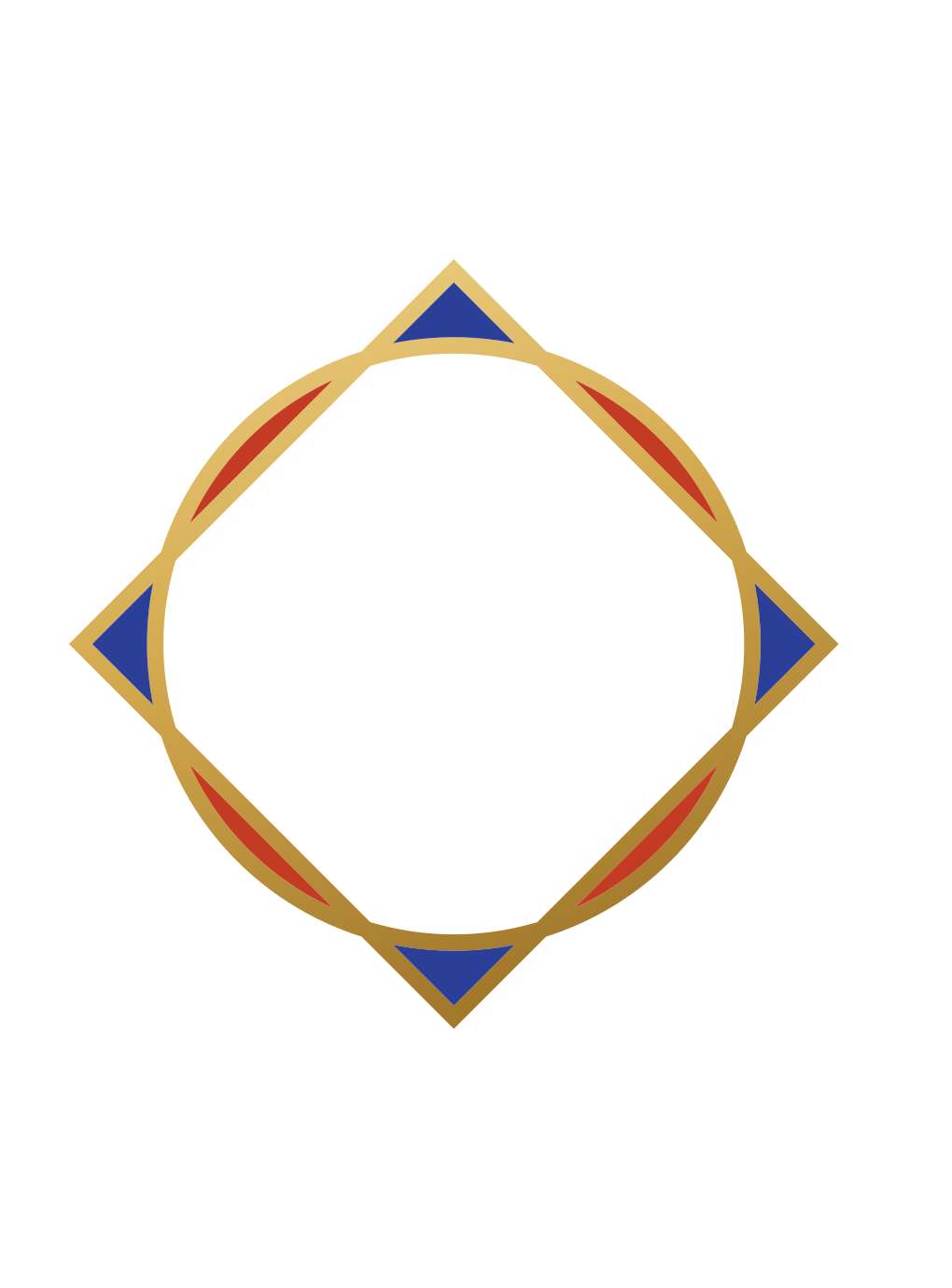
Dürer squares the circle
In 1525 Albrecht Dürer printed in his Underweysung der Messung how to make a circle and a square that hold as much as each other. He names the task in Latin, “Von noeten wer zuowisen quadratura circuli”, and adds “aber soliches ist noch nit von den gelerten demonstrirt”: the learned have not yet proved it. So he gives a way “Mechanice”, near enough that in the work it fails not at all, or only a little: “Reyß ein fierung vnd teyl den ortstrich in zehen teyl”, draw a square and divide its diagonal into ten, then draw a circle whose diameter has eight of them. His woodcut stands the square on a corner, the diagonal upright and numbered, the circle about its middle. That circle holds 0.53 percent more than the square; taken as exact, the rule would make the round of a circle three and one eighth times its diameter. Dürer does not say how to divide in ten. Here the square stands in a circle, its diagonals two diameters at right angles. The line from one end of the level diameter through the middle of the upright radius meets the circle four fifths of the radius above the level line, and its mirror from the other end meets it at the same height; the line joining the two crosses the upright radius four fifths of the way out, and the circle about the middle through that crossing has eight tenths of the diagonal for its diameter.
Sources
- Albrecht Dürer, Underweysung der Messung, 1525, second book