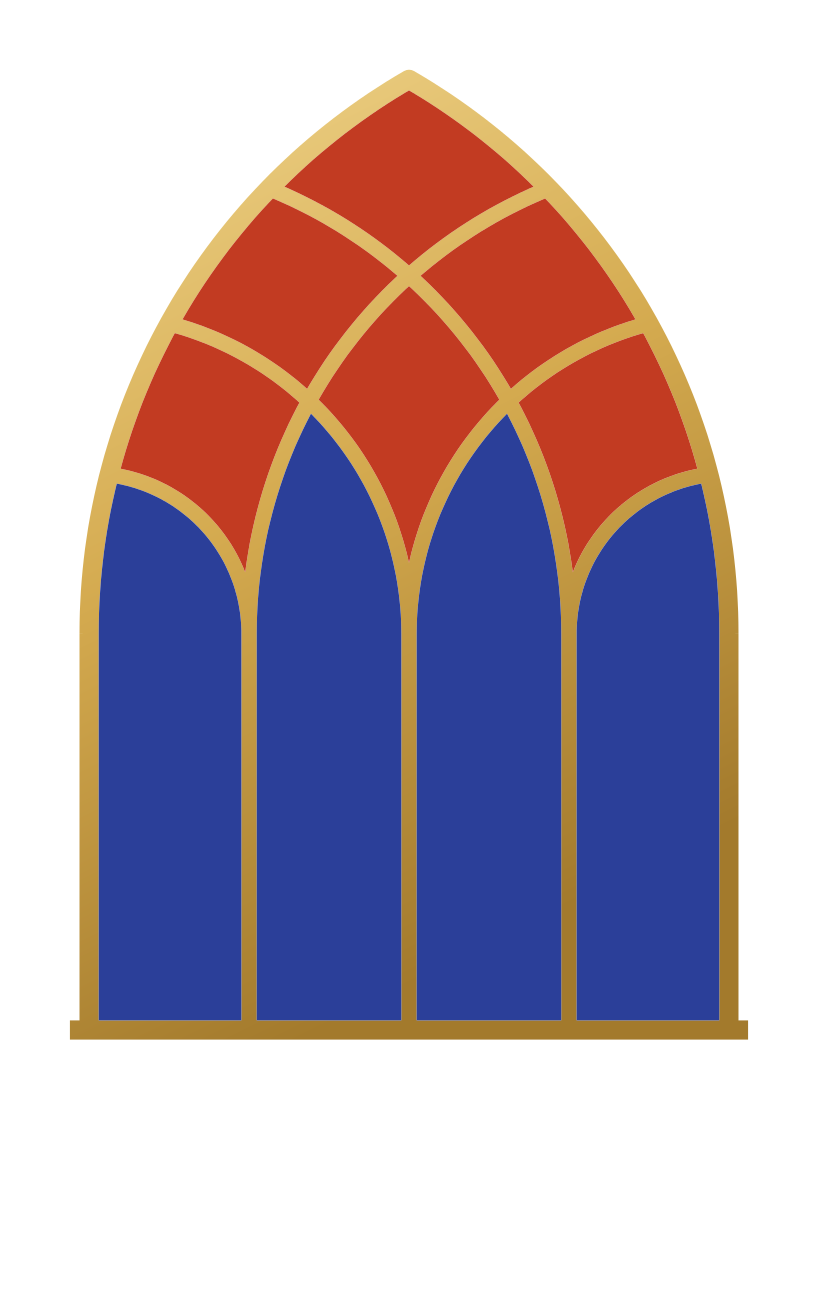
Intersecting tracery
About 1300 the mullions of a window were left without capitals and run on above the springing, branching into curved bars. Each bar was drawn with its own radius from the same centres as the window head, so it keeps an even distance from the flank swung from the same pin. With two lights the branching makes Y tracery, often used about that time. Here an equilateral head stands on the span; the line through its two crossings halves the span, and a vesica on each half halves it again: four lights. From the head of every mullion one bar is swung about each springing point, up to the far flank. Where the bars cross they make a pointed head over every light and lozenges above. Two pins carry the whole head, and every opening runs from a pin to the head of a mullion, so the figure is exact.
Sources
- James Stevens Curl and Susan Wilson, A Dictionary of Architecture and Landscape Architecture, 2015, “tracery”